Design Intent
The approach to the eco-restoration design for Eco Park was to restore the site conditions to a more natural coastal environment. Coastal communities are characterized by course-textured soils, such as sand and gravel, that are usually nutrient-poor and droughty. Plans for restoration in the coastal environment must consider these constraints, along with the potential impacts of desiccation from winds, salt spray, and saltwater inundation.
Eco Park’s concept plan depicts the various ecological communities that one would typically encounter along the beachfront: coastal dune, interdunal swale, heath, coastal shrubland, and grassland. Eco Park integrates each of these ecological communities in the site restoration, using the existing topography, level of exposure, and biological benchmarks to restore the natural balance and sustainability of the site.
The following narrative walks you through each of these proposed communities, starting on the south at the existing sand and cobble beach of Long Island Sound, moving north and perpendicular from the beach toward the uplands.
Moving landward from the beach on Long Island Sound, you first approach the foredune area. Besides the beach, this is the most dynamic ecological community on the site. The foredune is subject to offshore winds that carry salt spray and is often impacted by wave action, flooding, and over-topping (aka over-wash) under severe storm events. To increase resiliency and reduce potential wave energy, the project enhanced the existing dune by installing a sand fence and placing additional beach-compatible sand to widen and raise the height of the existing dune. The sand fence is intended to intercept the prevailing winds. Wind-blown sand will hit the fence slats and deposit at the fence line. The dune area is proposed to be planted with beachgrass – a very wind and salt-tolerant native plant that develops deep rhizomatous roots and can stabilize the shifting dune sands. Beachgrass thrives on fresh sand deposits, which bring nutrients into an otherwise sterile environment. According to the USDA, beachgrass can emerge after being covered up by 6 feet of sand!
As you cross over the crest of the foredune, you enter the back-dune area where the off-shore winds are much reduced, and the sandy soils become more stable. Here you may find beachgrass and seaside goldenrod growing in close association and occasional sprigs of beach pea, which fix nitrogen and help to bind the sandy soil. Coastal shrubs and heathlands typically take root in the more sheltered back-dune location.
At low-lying points in the dune system, between the foredune and secondary dune or landward of the secondary dune, you may encounter an interdunal swale. There is a low area on site that is damp, and saltmeadow cordgrass was found growing in patches closest to the beach. Interdunal swales will often develop landward of dune over-wash areas, where salt may accumulate in the surface soils as soil water evaporates, and the groundwater table may be close to the soil surface. The project will enhance the species diversity in these low-lying interdunal areas by including a seed mixture containing more than 25 species of perennial wildflowers, and interplanting clusters of salt-tolerant native rushes and grasses. A variety of pollinators and swamp milkweed were included to attract bees and butterflies, especially monarchs that migrate south selectively over shoreline areas. Many of the wildflowers will also produce seeds that are relished by songbirds late in the growing season. Interdunal plants were carefully selected that can tolerate alternating moist and dry conditions, including some facultative wetland plant species.
As you move through the secondary dune areas, you encounter large patches of coastal shrubs, and low-growing, very drought-tolerant heath zones. Coastal heath communities are typically dominated by beach heather and bearberry, and over time, lichen will develop. Since beach heather is listed as a state-endangered species, none are proposed for planting in the restoration area. However, other drought-tolerant native species that are commonly found on stable back-dunes including bearberry, low pasture Virginia rose, butterflyweed, common milkweed, flax-leaved aster, common evening primrose, and seaside goldenrod, are proposed for planting in the coastal heath zone. Wild lupine is also proposed for planting in the open heath areas closest to the boardwalks.
The coastal shrub zone is characteristically dominated by northern bayberry, with beach plum as a co-dominant species. Additionally, winged/shining sumac, fragrant sumac, and groundsel-bush are proposed, with scattered plantings of downy serviceberry and red chokeberry. Numerous migrating songbirds seek the fruits of all these shrubs to maintain their protein and fat levels over their long flights. Clusters of eastern redcedar, reminiscent of the Savin Cedars for which this area was historically named, have been included to provide year-round evergreen cover. There is a unique close association between eastern red cedar and our only northeastern native cactus, the prickly pear. Prickly pear cactus could not be planted due to its rare Special Concern Species status in Connecticut, but since it has been known to grow in this space and nearby coastal environments, it is hoped that this plant species will eventually populate the restoration site over time being carried in by wildlife passage through the area.
Drifts of coastal grasslands also occupy and stabilize the secondary dune areas. Little bluestem, switchgrass, broomsedge bluestem, and American beachgrass are proposed as co-dominant species in this coastal zone. Seaside goldenrod often moves into the more stable back-dune and grassland habitats.
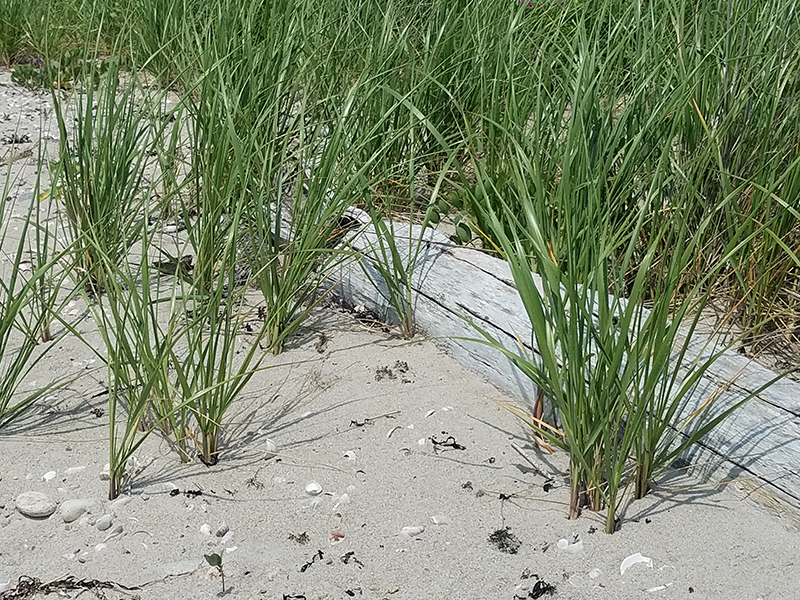
American Beach Grass (Ammophila breviligulata)
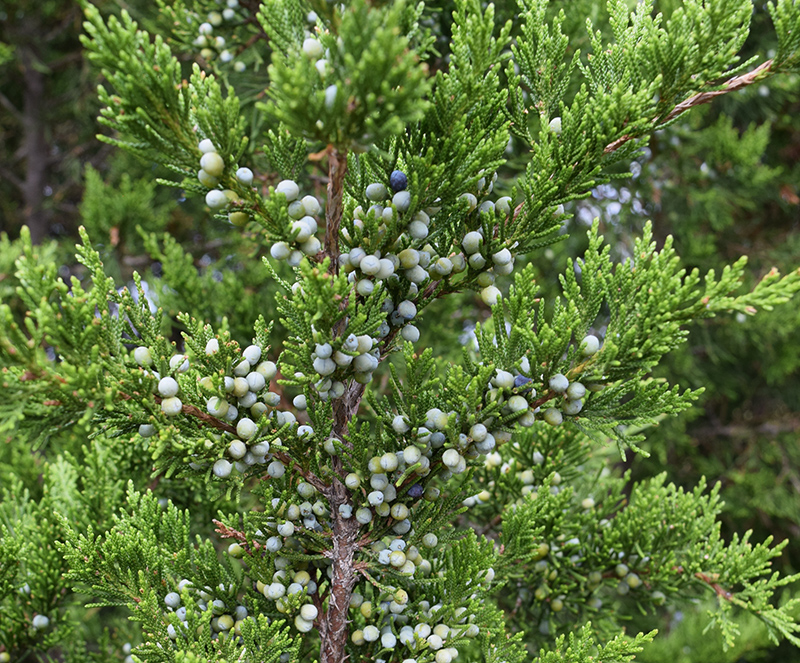
Eastern Red Cedar (Juniperus virginiana)
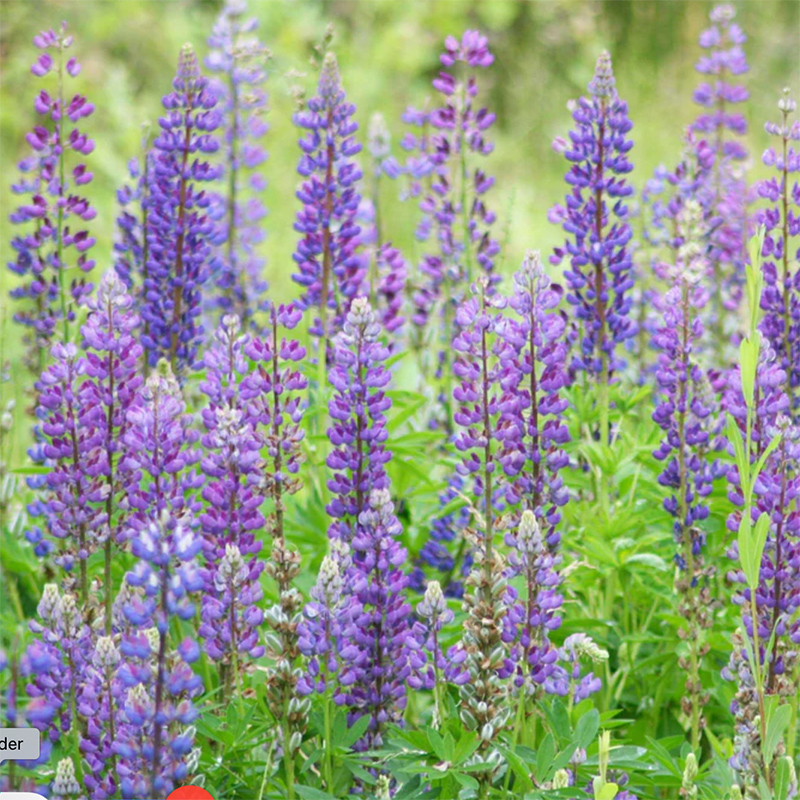
Wild Lupine (Lupinus perennis)